

Grass Cutting
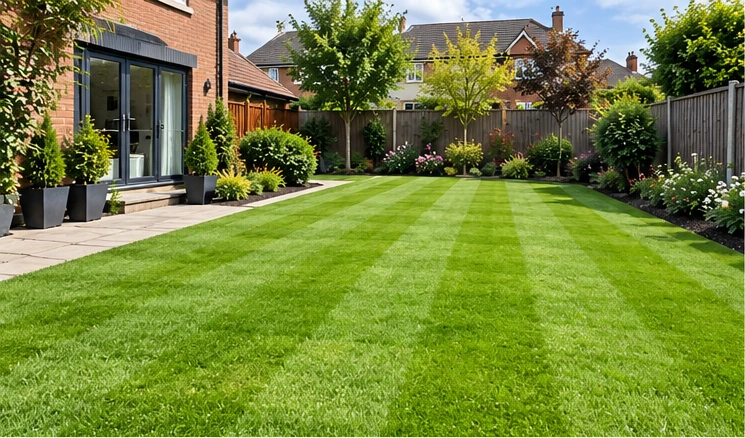
Controls height and presentation while avoiding unnecessary scalping or damage in poor ground conditions.

Professional property and facilities support across Glasgow and surrounding areas.


Practical outdoor care for homeowners, landlords, property managers and suitable commercial sites. We provide grass cutting, lawn mowing, hedge trimming, weeding, garden maintenance, litter picking and agreed site-clearance work.
A customer looking for grass cutting usually wants more than a mower passed across the lawn. They want the grass to look even, the edges to feel finished, overgrown areas brought back under control and the garden left easier to live with. Commercial clients usually want the same principle applied at a larger scale: entrances, grassed areas, borders and boundaries that consistently look managed.
That means understanding the difference between maintenance and recovery. A lawn that is already being looked after can usually be maintained with sensible cutting heights and timing. A lawn that has been left long may need a staged first cut. A hedge that only needs its new growth trimmed is not the same job as a mature hedge that needs major reduction. A border with young annual weeds is not the same as one containing established perennial weeds with spreading roots.
Our aim is to use that knowledge to choose a sensible approach for the condition in front of us. The page below explains the services we provide and the practical garden knowledge behind them, so customers can understand what good maintenance should achieve before they book.
Where paths, patios or driveways need more than vegetation control, our roof and exterior cleaning services include suitable hard-surface cleaning. On managed commercial sites, our commercial cleaning services can separately support entrances and shared indoor areas.
The detailed guides stay closed until you choose the service you want to learn about. Each guide explains what we do, why the method matters and what customers often do not realise until a garden problem has already developed.
Commercial maintenance works best when the site is divided into clear areas with an agreed standard for grass, borders, litter and boundaries rather than repeating the same generic “grounds maintenance” description.
Grass cutting controls height; good lawn care also considers cutting stress and ground condition. Hedge trimming controls young growth; good hedge maintenance also considers species, old wood and wildlife. Weeding improves appearance; knowledgeable weeding also considers roots, seeds and invasive plants.
Controls height and presentation while avoiding unnecessary scalping or damage in poor ground conditions.
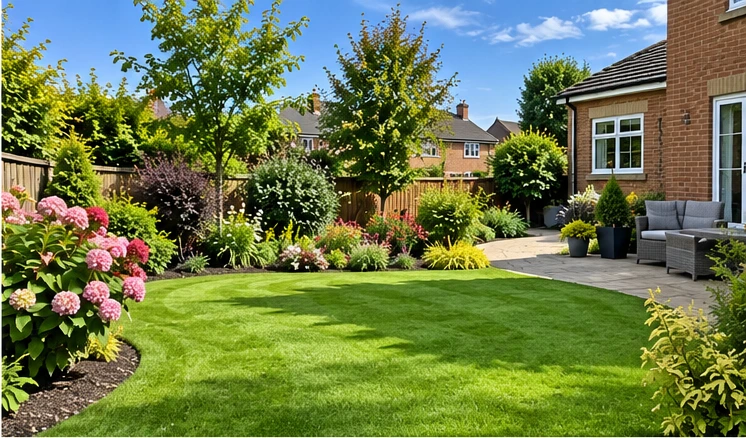
Keeps several small garden problems from building into one large overgrown reset.
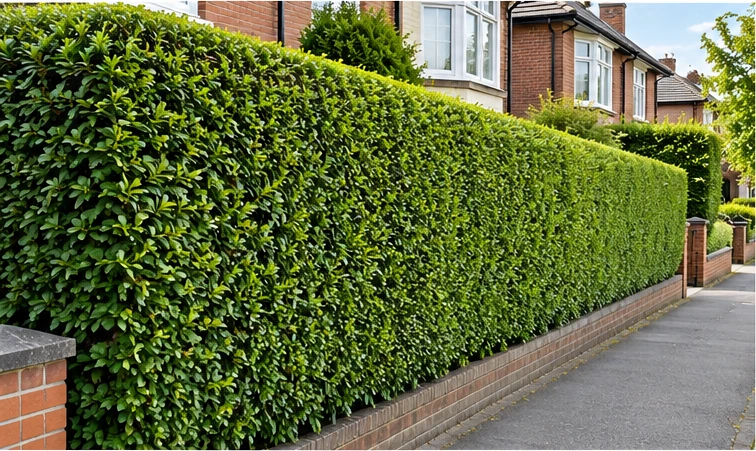
Controls new growth while respecting how different hedge types respond to harder cutting.
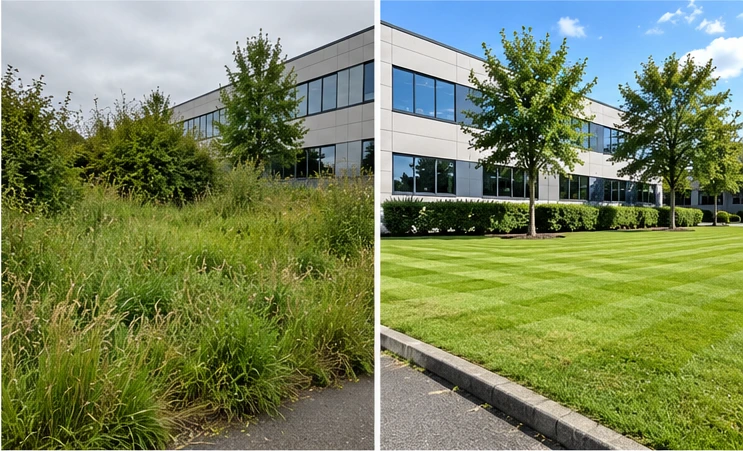
Creates a consistent standard across visible areas rather than treating every part of a site the same.
Deals with unwanted growth according to its life cycle instead of assuming all weeds disappear after one pull.
Resets neglected areas while separating ordinary vegetation from material that needs specialist handling.
Wase Support Services provides several property and facilities services, but our grass and garden work is not treated as an add-on. The personnel assigned to grounds-maintenance work are Lantra-trained, and the service is built around the practical condition of the lawn, hedge, borders or site rather than a generic checklist.
For a homeowner, that may mean knowing when long grass should be reduced progressively instead of scalped, when wet ground will compromise the finish, or when a hedge should not be cut because of nesting wildlife. For a commercial client, it means understanding that a well-maintained site is judged across entrances, lawn edges, borders, litter-prone areas and boundaries — not just by whether somebody has run a mower over the grass.
We aim to be clear about what ordinary maintenance can achieve and where a different type of work is needed. Mowing does not cure drainage or compaction. Routine hedge trimming is not the same as major hedge renovation. Ordinary weeding is not the correct response to every invasive plant. That distinction is important because knowledgeable maintenance protects both the property and the customer's expectations.
Learn more about Wase Support ServicesGrounds-maintenance personnel are trained for the type of work and equipment they are assigned.
Wase Support Services carries £5 million insurance cover for the services it provides.
We support private gardens as well as suitable business, landlord, managed-property and commercial grounds requirements.
Where weather, access, wildlife, plant condition or site conditions affect the work, we explain the practical reason rather than promising the same result in every situation.
If a problem needs lawn renovation, specialist invasive-plant control, tree work or another service outside routine maintenance, we would rather identify that limitation clearly.
Customers should be able to see why a contractor made a decision about the lawn, hedge or grounds rather than receiving the same treatment on every property.
Our grounds-maintenance personnel are Lantra-trained. Training supports competent use of grounds equipment and a more professional approach to the task.
Wase Support Services carries £5 million insurance cover for the services it provides.
We distinguish routine mowing from lawn problems, trimming from hedge renovation, and ordinary weeds from persistent or invasive growth.
If weather, nesting wildlife, access or the condition of the garden changes what can sensibly be achieved, we explain it rather than forcing the wrong method.
We support homeowners as well as landlords, businesses, property managers and suitable managed sites.
The aim is not to sell unnecessary tasks. It is to identify the work that will make the outdoor area easier to manage, more presentable and better suited to its use.
Selected genuine feedback from our Google Business Profile.
“Wase Support Services did my garden and cleaning for my Airbnb. Great job.”
Muhammad Ahmad“Nice garden work. Will hire next time.”
Dreamy Blossom“I like the way the team from Wase Support Services did my garden and house cleaning. Highly recommend.”
Lewis DonnellyWe serve Glasgow City Centre, Maryhill, Summerston, Bishopbriggs, Robroyston, Kirkintilloch, Lenzie, Cumbernauld, Bearsden, Milngavie, Clydebank, Govan, Paisley, Renfrew, Rutherglen, Cambuslang, Newton Mearns and East Kilbride. Nearby locations can be checked when you contact us.
These answers focus on the questions behind the service: why grass reacts badly to an extreme cut, why weeds return, when hedge work should stop and why some garden problems need more than ordinary maintenance.
Grass leaves produce the energy the plant needs. Removing too much leaf at once can leave the lawn stressed, pale or scalped, especially when the grass was already long. For normal mowing, it is better to reduce height sensibly than to force every lawn to the lowest mower setting.
It is a useful mowing principle that says you should normally avoid removing more than around one-third of the grass height in a single cut. If the lawn is very long, a higher first cut followed by later reduction is usually kinder to the grass than one severe cut.
Very wet grass tends to bend and clump, which can produce an uneven finish. Saturated soil can also compact or mark more easily under foot or machinery. Waiting for better ground conditions can protect the lawn and improve the result.
No. Mowing maintains grass height and can support a denser surface, but it does not fix every lawn problem. Moss, compaction, poor drainage, heavy shade, bare areas and some weed problems may need separate lawn renovation or specialist treatment.
Not always. Small, finely distributed clippings can disappear back into a healthy lawn. Heavy clumps from long or wet grass can sit on the surface and smother patches, so collection or removal can be more appropriate in those conditions.
Many perennial weeds can regrow from roots, crowns or underground stems left in the soil. Removing the visible top improves appearance but may not remove the entire plant. This is different from young annual weeds, which are often easier to remove before they flower and set seed.
Once weeds flower and produce seed, they can add another generation of seed to the soil. Removing them earlier helps reduce future spread and is one reason routine border care can be more effective than waiting until the area looks badly overgrown.
No. Different hedge plants respond differently. Some conifers, for example, do not reliably regrow from old brown wood after the green outer growth is removed. A major reduction should therefore be treated differently from a normal maintenance trim.
A hedge that is slightly narrower at the top allows more light to reach the lower branches. This can help the lower part stay denser instead of becoming thin and bare through self-shading.
We do not continue work that could damage or interfere with an active nest. In Scotland, wild-bird nests are legally protected while in use or being built, so the affected hedge work must wait until the nest is no longer active.
Garden maintenance looks after an existing outdoor space through tasks such as mowing, suitable hedge trimming, weeding and tidying. Landscaping usually means creating or substantially changing the space, for example new paving, major construction, new levels or structural garden features.
Visitors judge the whole external environment. A cut lawn can still look neglected if weeds dominate the entrance, litter builds up around parking areas or vegetation spreads across paths and boundaries. Commercial grounds maintenance works best when visible areas are managed to a consistent site standard.
No. Growth rate, visibility and use differ across a site. Main entrances and customer-facing areas may need closer presentation control than low-visibility back areas. Grass, hedges, weeds and litter also change at different rates through the year.
It should not be treated like ordinary vegetation. Scottish guidance warns that management methods such as strimming can contribute to the spread of Japanese knotweed. Suspected invasive plants should be identified and handled under appropriate controls, with specialist treatment used where required.
Sharps, chemicals, asbestos-containing material and other hazardous or unknown waste should not simply be mixed into normal garden or general litter. The affected area may need to be isolated and an appropriate specialist handling or disposal route used.
Our grounds-maintenance personnel are Lantra-trained, and Wase Support Services carries £5 million insurance cover for the services it provides.
Practical information about grass cutting, lawn care, hedge trimming and garden maintenance in Glasgow.
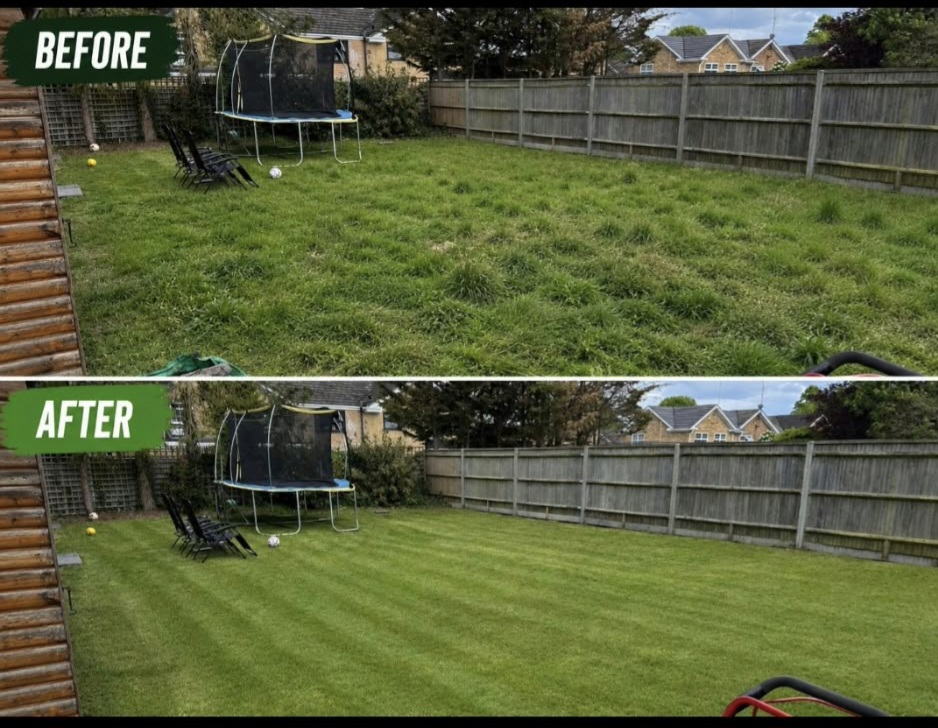
Keeping your garden well maintained is important for both homes and business in Glasgow. Due to the local weather, grass and...
Read ArticleLooking for reliable property and facilities support? Tell us about your premises, service requirements and priorities. Our team is ready to discuss a practical solution built around your property or organisation.