

Road & Traffic Exposure
Windows beside busy roads can develop traffic film faster than windows in quieter residential areas.

Professional property and facilities support across Glasgow and surrounding areas.


Professional window cleaning for homes, flats, landlords, managed properties, offices, shops and commercial premises. We use traditional glass-cleaning methods and purified-water systems according to the property, with a 40 ft water-fed telescopic pole available to reduce the need for working at height.
A streak-free result is not created by simply using more detergent. It comes from removing the dirt, using clean equipment, controlling the water and leaving as little residue as possible on the glass when it dries.
Exterior windows collect traffic film, dust, pollen, bird deposits, rain splash, insects and dirt from frames and seals. Ordinary tap water also contains dissolved minerals. When hard water evaporates, those minerals can remain behind as spots or marks. This is why purified water can be useful for exterior window cleaning.
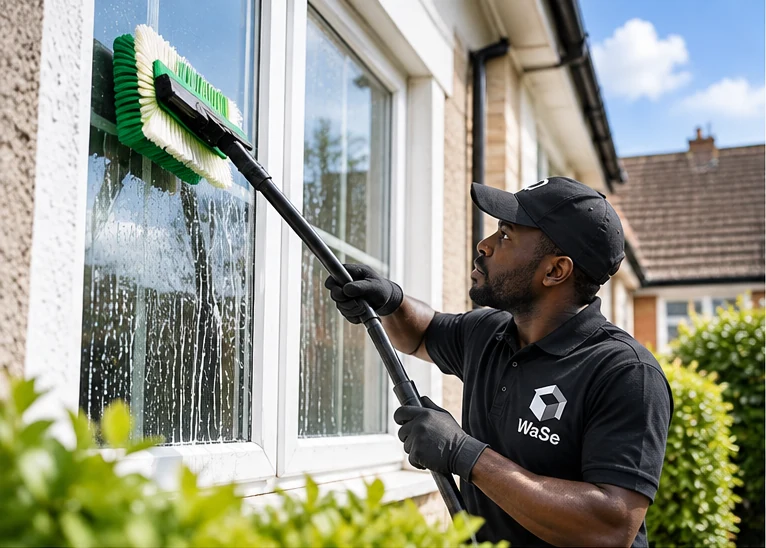
Our pure-water system is used with a water-fed brush to agitate dirt from the glass, frames and suitable sills. The surface is then rinsed thoroughly with purified water. Because the dissolved minerals that commonly cause water spotting have been removed, the correctly rinsed glass can be left to air-dry naturally without polishing it with a cloth.
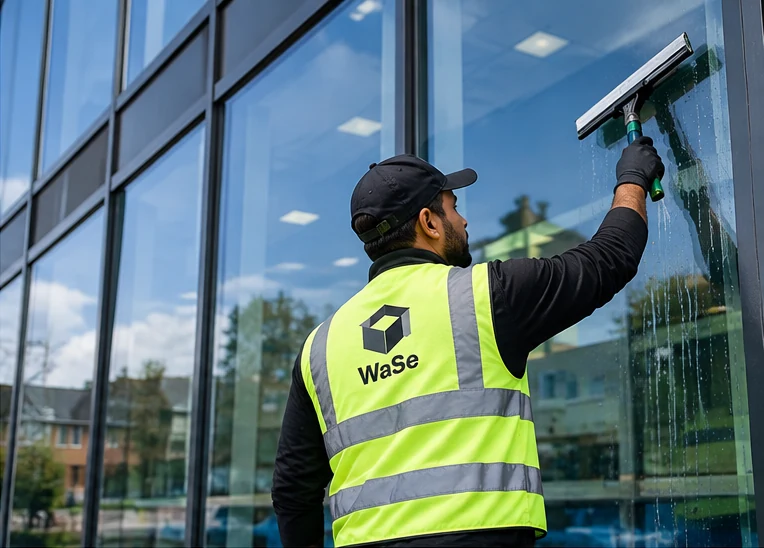
Internal glass is different. Where appropriate, we use a controlled traditional method: suitable cleaning solution, clean applicator, professional squeegee and careful edge detailing. The method changes because internal windows cannot simply be flooded and rinsed like an exterior pane.
For wider property upkeep, our cleaning services cover suitable indoor and shared spaces, while roof and exterior cleaning can address gutters, paving and other external surfaces. These are separately scoped services.
We removed repetitive service descriptions and separated the page by real customer need: home windows, commercial glazing, high-level access, internal glass, frames and managed properties.
The quality of the final result depends on agitation, rinsing and water quality working together. Purified water helps because dissolved minerals have been removed before the water reaches the glass.
A water-fed brush is used to loosen ordinary dirt. On a first clean, frames and seals can require additional attention because old dirt may continue to release into the rinse water. Once the soil is loosened, the pane is rinsed from the upper area downward with clean purified water.
The final rinse should remove the dirty water rather than simply move it around. When the rinse is sufficiently clean, the glass can air-dry. This is why a pure-water window can look wet when the cleaner leaves and still dry clear afterwards.
Pure water is not a universal stain remover. Existing calcium deposits, cement, silicone, paint, adhesive, scratches and etched glass require separate assessment. Trying to remove every stubborn mark with extra pressure or an aggressive scraper can turn a cosmetic problem into permanent glass damage.
The final rinse is produced with purified water so ordinary dissolved mineral residue is minimised.
A dirty brush can put contamination back onto the pane, so equipment condition matters.
Frames are cleaned appropriately before the final glass rinse so dirty runoff is reduced.
Enough clean water is used to carry loosened dirt off the glass rather than leaving it behind.
The exterior pane can then be allowed to dry naturally without introducing cloth residue.
Window cleaning at height has to be planned around the building, the cleaner and the public. Hoses, ladders, platforms and powered access can all introduce risk if they are used without considering the site.
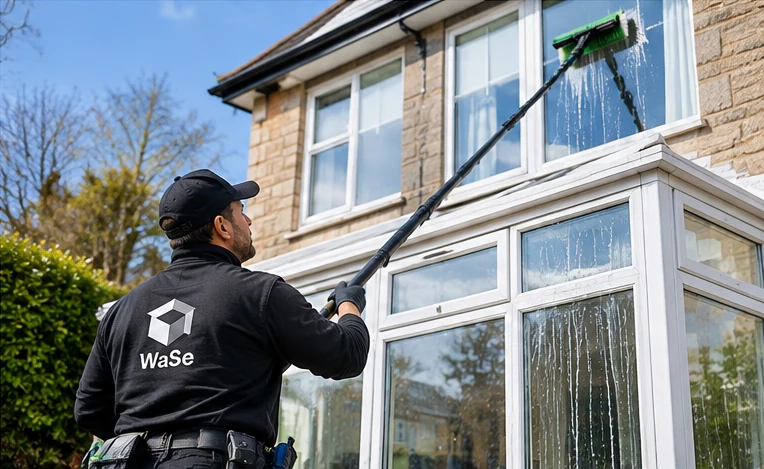
The 40 ft water-fed telescopic pole helps reduce that exposure by taking the cleaning tool to the glass while the operative stays at ground level. On suitable building elevations it can reach many high windows, including glazing around fifth-floor level, without automatically putting a cleaner on a ladder or platform.
If a window cannot be safely or effectively reached with the pole, we do not simply overextend the equipment. The next access method is considered according to height, ground conditions, obstructions, public access and the work required. Where a MEWP is necessary, appropriately IPAF-trained personnel are used for powered access.
Reduces unnecessary exposure to falls from height.
Where height cannot be avoided, competent personnel and suitable work equipment are required.
Powered access is operated by appropriately trained personnel where the selected MEWP requires it.
Hose routes, pole movement and the area below high-level work are considered during site setup.
Wind and other adverse conditions can make extended-pole or powered-access work unsuitable.
There is no universal interval. Cleaning frequency should follow exposure, building use and the standard the customer wants to maintain.
Windows beside busy roads can develop traffic film faster than windows in quieter residential areas.
Pollen, sap, leaf debris and bird deposits can increase the need for cleaning at some properties.
Customer-facing glass may need more frequent attention because hand marks and street dirt are seen at close range.
Wind direction, rain splash and exposed elevations can cause one side of a building to become dirty sooner than another.
A heavily soiled first clean can require more work; regular visits are usually about preventing that build-up from returning.
Landlords and property managers can set a frequency around occupancy, inspection and presentation requirements.
Wase Support Services provides window cleaning for residential, landlord, managed-property and suitable commercial environments. Our method is based on the glass, access, contamination and practical requirements of the site.
Our personnel are trained in the window-cleaning equipment and methods they use. We also have work-at-height trained staff and IPAF-trained personnel for suitable powered-access requirements.
The aim is not to use access equipment simply because a window is high. Our 40 ft water-fed telescopic pole allows many upper windows to be cleaned from ground level, helping reduce unnecessary work at height while still delivering a thorough exterior clean.
Learn more about Wase Support ServicesWase Support Services carries £5 million insurance cover for the services it provides.
Window-cleaning staff are assigned around the method, equipment and type of site being serviced.
Higher-level work is planned around competence, equipment, conditions and site risk.
Appropriately trained personnel are available where suitable powered access is required.
Allows many high exterior windows to be cleaned from ground level instead of automatically working at height.
We support homes, landlords, managed properties, offices, shops and suitable commercial premises.
We serve Glasgow City Centre, Maryhill, Summerston, Bishopbriggs, Robroyston, Kirkintilloch, Lenzie, Cumbernauld, Bearsden, Milngavie, Clydebank, Govan, Paisley, Renfrew, Rutherglen, Cambuslang, Newton Mearns and East Kilbride. Nearby locations can be checked when you contact us.
Practical answers for customers who want to understand how the glass is cleaned, why pure water is used and how higher windows can be reached safely.
Purified water has most of the dissolved mineral content removed. The water-fed brush loosens ordinary exterior dirt and the glass is then rinsed thoroughly. Because the final rinse contains very little mineral residue, the glass can air-dry without the white spotting commonly associated with hard tap water. Clean frames, equipment and sufficient rinsing are still essential.
The final rinse is designed to be left to air-dry. Drying the pane with an ordinary cloth can reintroduce lint, detergent or minerals. If the glass has been properly agitated and rinsed with sufficiently pure water, it should dry clear without hand polishing.
Common causes include dirt bleeding from frames or seals, detergent residue from previous cleaning, insufficient rinsing, contaminated equipment or existing hard-water deposits. A heavily soiled first clean can therefore require more frame cleaning and rinsing than a normal maintenance visit.
Not always. Purified water helps prevent new mineral spotting from the rinse water, but established calcium deposits or etched mineral staining may require a separate specialist treatment. Severe etching can be permanent.
Pure-water cleaning is particularly useful for exterior windows because the glass can be scrubbed and rinsed from the ground with a water-fed pole. Traditional cleaning uses a controlled cleaning solution and squeegee to physically remove the water, making it well suited to many internal windows, entrance doors and low-level detail work.
Our telescopic water-fed pole extends to 40 ft. On suitable elevations this can reach many multi-storey windows and can include glazing around fifth-floor level. Practical reach depends on the building height, setback, pole angle, balconies, canopies, ground conditions and other obstructions, so each property is assessed rather than guaranteeing access from storey count alone.
Where a window can be cleaned effectively from the ground, the pole reduces the need to expose a worker to a fall from height. Ground-level cleaning also avoids repeatedly moving ladders around windows. Some buildings will still need another access method when the pole cannot safely or effectively reach the glazing.
The access requirement is assessed separately. Depending on the building and site, suitable powered access or another specialist method may be required. Where a MEWP is the selected method, appropriately IPAF-trained personnel are used for the relevant powered-access task.
Yes. We have work-at-height trained personnel, and higher-level tasks are planned around competence, access equipment, ground conditions, weather and the people who may be affected below the work area.
IPAF training relates to the safe and effective operation of mobile elevating work platforms. Where a MEWP is required for a suitable window-cleaning task, appropriately trained personnel are used for the relevant machine category and site requirements.
Yes, suitable frames and sills can be included. Cleaning the upper frame is particularly useful on a first clean because dirt held there can run back down onto newly rinsed glass.
Older uPVC can oxidise, fade or permanently discolour through weather exposure. Routine cleaning removes surface dirt and biological build-up but cannot always restore plastic that has physically aged or lost its original finish.
Routine bird deposits can normally be softened and removed during window cleaning. Heavy or baked-on contamination may need extra agitation and rinsing. Care is taken not to scratch the glass while removing stubborn material.
These are specialist contaminants rather than ordinary window dirt. They need to be assessed before removal because inappropriate scraping, abrasives or chemicals can scratch or damage the glass, frames or seals.
Yes, internal window and glass cleaning can be discussed. Interior work normally uses a controlled traditional method because floors, furniture, electrical equipment and other internal finishes limit how much water can safely be used.
Light rain does not automatically make exterior cleaning impossible, especially where the glass is already being rinsed with purified water. Heavy rain, strong wind, poor visibility, unsafe ground conditions or other adverse weather may make the planned work unsuitable and can require rescheduling.
There is no single correct interval. Road exposure, weather, surrounding trees, bird activity, property presentation and how quickly the windows visibly soil all influence the frequency that makes sense for a particular home.
Customer-facing glazing may need more frequent cleaning because fingerprints, traffic film and street dirt are seen at close range. The right frequency depends on the premises, footfall, road exposure and presentation standard required.
Suitable upper-level exterior windows can be considered where there is safe practical access from the ground or another appropriate method. Our 40 ft water-fed pole allows many high windows to be reached from ground level, but recessed elevations, courtyards, balconies and building geometry can affect access.
Not necessarily where the agreed exterior windows can be safely accessed without entering the property. Gates, locked areas, internal cleaning or other access requirements should be arranged in advance.
Yes. One-off cleaning is available for suitable properties, including property refreshes, landlord turnarounds and customers who do not need an ongoing schedule.
Yes. Recurring cleaning can be arranged for suitable homes, managed properties and commercial premises. Frequency is agreed around the actual site rather than assuming every customer needs the same interval.
Yes. Wase Support Services carries £5 million insurance cover for the services it provides.
We cover Glasgow City Centre, Maryhill, Summerston, Bishopbriggs, Robroyston, Kirkintilloch, Lenzie, Cumbernauld, Bearsden, Milngavie, Clydebank, Govan, Paisley, Renfrew, Rutherglen, Cambuslang, Newton Mearns and East Kilbride. Nearby areas can be checked when you contact us.
Read our latest window-cleaning guidance, property-care information and practical insights from Wase Support Services.
No Window Cleaning news and insights have been published yet.
Looking for reliable property and facilities support? Tell us about your premises, service requirements and priorities. Our team is ready to discuss a practical solution built around your property or organisation.